


MeYo : be friends
4.47.12K Reviews
App Specs
- Version
- 3.34.3
- Updated On
- License
- Free
- Downloads
- 10,000,000+
- Developer
- MeYo Studio
- Categories
- Social
- Platform
- Android
Screenshots
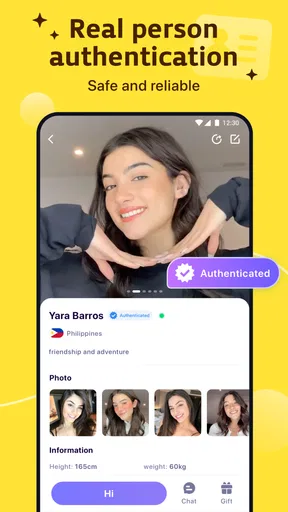


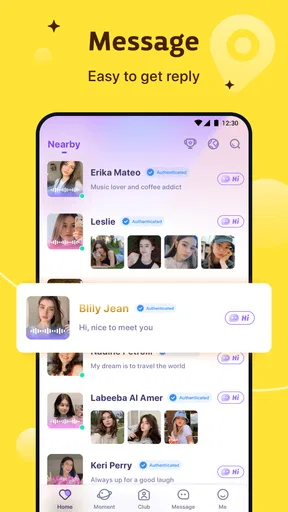
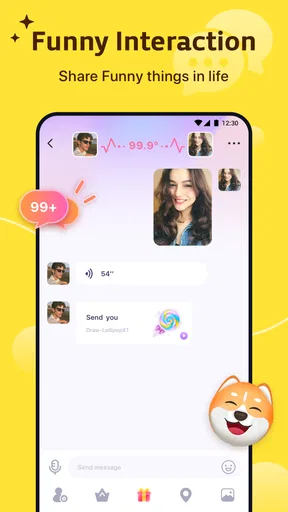
 Analysis by AppCompare
MeYo: be friends is a social app from MeYo Studio that tries to make meeting and talking to people feel more active than a standard messaging service. I found its appeal in the way it treats conversation as something you return to, not just a quiet inbox waiting for replies. The app combines chat, games, and family-oriented social interaction, so it can suit people who want a lighter reason to start talking instead of sending a plain “how are you?”
That approach also changes the rhythm of communication. A normal messenger is usually built around people you already know, while this app is more about opening social doors and keeping interaction moving. In my experience, that makes it easier to start a conversation, but it also means I had to be more deliberate about attention, privacy, and personal limits. MeYo is free to install, carries a Mature 17+ age rating, and runs on Android devices using version 5.0 or later. Its current version is 3.34.3.
How MeYo fits into everyday communication
The first thing I noticed is that MeYo is not trying to replace every messaging app on my phone. If I need reliable, practical communication with relatives, coworkers, or a group organizing a trip, I would still choose a conventional messenger. Those apps are clearer when the main goal is exchanging information with people whose identities and relationships are already established.
MeYo makes more sense when the goal is social discovery or casual interaction. The combination of chat and games gives a conversation an activity to sit beside. That matters because many online conversations fail before they begin: both people may want to talk, but neither has an easy opening. A shared activity can reduce that awkward first step and give the exchange a natural subject.
I also think the family angle is worth understanding carefully. “Family” here should not automatically be read as a private household communication tool. The app’s broader social design can appeal to people looking for friendly communities or relaxed interaction, but the Mature 17+ rating is an important reminder that adults should treat it as an adult social environment. I would not hand it to a child simply because the store summary includes family language.
The app has built a substantial audience, with more than ten million installs and an average score of 4.4 from roughly 539 thousand ratings. That level of adoption can make a social app feel less empty than a new platform with only a small user base. Still, popularity does not remove the need to judge each conversation individually. A large audience brings more chances to meet compatible people, but also more chances to encounter conversations that are irrelevant, intense, or uncomfortable.
Starting a conversation without forcing it
My most useful way to approach MeYo was to treat the chat-and-game combination as an icebreaker rather than a promise of friendship. That distinction kept the experience comfortable. I did not assume that every new contact needed a long personal conversation, and I did not feel obligated to reply immediately just because a chat had started.
Worth Reading Before You Choose

EA SPORTS FC Mobile 26 Is a Bigger Football Game, but It Takes Time

Flipboard Shows What News Apps Must Do Beyond the Feed

Switching to Android Auto Means Rethinking Your Driving Routine

Google Calendar Makes a Crowded Week Easier to Manage

Ludo King Makes the Most of the Minutes Between Plans

Baby Panda World Brings Quick Play to Modern Phones, but Its Game Library Feels Busy
A practical routine is to begin with a short exchange, see whether the other person respects the pace, and only then invest more attention. If the conversation feels one-sided, overly personal, or rushed, there is little reason to keep feeding it. The app is strongest when both people use the activity as a shared starting point rather than as pressure to reveal private details.
This is one of the less obvious trade-offs of a social platform built around interaction: the feature that makes talking easier can also make conversations feel more persistent. A game or prompt may keep an exchange alive after the initial curiosity has faded. I found it helpful to ask myself whether I was continuing because I genuinely wanted to or simply because the app made the next response easy.
Conversation flow and the cost of constant availability
MeYo’s style encourages a quicker, more reactive form of communication than a traditional forum. Instead of writing a carefully considered post and waiting for a response, users can move between short messages and social activities. That can feel lively, especially during a spare moment, but it can also fragment attention.
For me, the main cost was not the length of any single interaction. It was the repeated decision to check, answer, return, and check again. A few short sessions can occupy more mental space than one planned conversation because each interruption leaves a small unfinished thread behind. This is where the app changes communication rhythm most clearly: it turns social contact into a series of small invitations throughout the day.
I recommend setting a purpose before opening it. I might use it for a brief chat during a break, to reconnect with someone I already enjoyed talking to, or to try a social game when I have time for an actual exchange. Opening it without a reason can lead to passive browsing and conversations that never become meaningful. That is not a flaw unique to MeYo, but its active social design makes the pattern easier to fall into.
Another useful habit is to avoid treating response speed as a measure of interest. People use social apps at different rhythms, and a delayed answer does not automatically require a follow-up. Giving conversations room to breathe improves clarity and protects attention. It also helps distinguish a genuinely mutual connection from one maintained only by constant prompting.
Using games as a social bridge
The game element is most valuable when conversation itself feels difficult. A shared activity gives both people something concrete to react to, which can reveal personality more naturally than a sequence of direct questions. I found this especially useful for low-pressure interaction: instead of trying to write an impressive introduction, I could let the activity create a small moment to discuss.
There is a trade-off, though. Games can make an interaction feel friendly before trust has actually developed. Enjoying the same activity does not tell me whether someone respects boundaries, handles disagreement well, or deserves access to personal information. I would keep early conversations light and avoid confusing entertainment with familiarity.
For users who already have a small circle of friends on the platform, the activity layer can also prevent chats from becoming repetitive. A conversation does not always need a serious topic to be worthwhile. Sometimes a shared distraction is exactly what helps friends stay connected when they do not have time for a long call. In that use case, MeYo feels more purposeful than a social feed built mainly around passive scrolling.
Attention, notifications, and personal boundaries
The biggest question I would ask before installing MeYo is not whether it has enough things to do. It is whether I am comfortable with a social app that can invite frequent engagement. If I already struggle to separate messages from leisure, adding another stream of conversations may create more noise rather than more connection.
I found that the healthiest approach is to decide in advance when the app belongs in my day. A short evening window can be better than checking it whenever a notification appears. The same principle applies to conversations: I can answer when I have the energy to be present instead of replying from habit. That small boundary improves the quality of the exchange and reduces the feeling that I am permanently available.
It is also worth separating friendliness from access. Being polite does not mean sharing a phone number, location, workplace, photographs, or other identifying information. I would keep the early stage inside the app and pay attention to how a person reacts to a simple “not yet.” Respect for a modest boundary is more informative than an enthusiastic introduction.
Because the app is rated Mature 17+, I would be especially cautious about younger users, mixed-age conversations, and any interaction that quickly becomes sexual, manipulative, or financially focused. The free download does not mean every request inside a conversation is harmless. If someone pushes for money, private images, urgent favors, or a move to another service before trust exists, I would end the exchange rather than negotiate.
Free access and in-app spending
MeYo is free, but optional purchases range from about fifty cents to nearly four hundred dollars per item. That is a wide range, so I would not approach the app as if every social feature were automatically cost-free. Before spending, I would identify what the purchase changes in my experience and whether it improves a real need or simply extends a moment of excitement.
This matters more in a social app than in a standalone utility because spending can become connected to attention and approval. A user may feel tempted to pay to keep an interaction active, stand out, or respond to social pressure. My advice is to set a firm budget before exploring paid options and to avoid buying anything during an emotionally intense conversation.
Parents and guardians should also remember that the age rating and purchase range make supervision important for any eligible teenager. A free installation can still lead to meaningful spending if payment controls are not configured. I would use the device’s purchase protections and discuss the difference between optional digital spending and necessary communication.
Who will enjoy MeYo, and who should choose something else?
I can recommend MeYo to adults who want a casual way to meet people, keep conversations active, and use games to reduce the pressure of small talk. It is particularly suitable for someone who finds a blank chat screen intimidating or who wants social interaction that is more playful than a standard messaging thread.
It may also work for friends who want an extra place to interact without making every conversation serious. The activity-based approach gives a group something to do together, which can be useful when everyone has limited time and does not want to arrange a voice call.
I would skip it if I want a tightly controlled private network, a professional communication tool, or a simple family messenger with no discovery element. For those needs, an established messenger with known contacts is clearer and easier to manage. I would also avoid it if notifications and open-ended social contact tend to drain me. A quieter community platform or a direct messaging app may offer better control.
Users looking for deep, organized discussions may prefer a forum or community service built around topics rather than rapid personal interaction. Users who mainly want visual entertainment may prefer a feed-based social network. MeYo occupies a middle ground: it is more participatory than passive scrolling, but less structured than a focused community.
My practical routine for using it well
I would begin by keeping the profile and first conversations modest. A short introduction is enough; there is no advantage in publishing every personal detail at the start. I would then test the social rhythm with one or two conversations instead of trying to maintain many at once. This makes it easier to notice whether the app is helping me connect or merely filling spare moments.
When a chat feels promising, I would use the game element as one part of the interaction, not the entire basis for trust. I would look for consistency, respect, and a willingness to accept pauses. Those signals tell me more about a potential friend than constant activity does.
If a conversation becomes demanding, I would slow it down directly. Saying that I am offline for the evening is clearer than disappearing while hoping the other person understands. If the other person reacts badly, that reaction is useful information. A healthy connection should leave room for ordinary life away from the screen.
Finally, I would review my spending and notification habits after the first week. If I am opening the app automatically, losing time to unfinished chats, or feeling pressure to purchase, I would change the routine or remove it. The app should support my social life rather than quietly setting its schedule.
My verdict on the social experience
MeYo: be friends succeeds when I use it as a low-pressure bridge into conversation. Its mix of chat and games gives people more ways to interact than a conventional inbox, and its large audience makes the idea of finding active conversations realistic. The developer, MeYo Studio, has positioned it as a social experience rather than a narrow messaging utility, and that identity comes through in everyday use.
At the same time, the app asks for more self-management than a private messenger. Its open-ended rhythm can consume attention, and a playful interaction can create a false sense of trust. The Mature 17+ rating should be taken seriously, while the broad range of in-app purchase prices deserves careful handling. These are not reasons to reject the app, but they are reasons to enter with clear limits.
My final recommendation is simple: try it if you want conversation to feel more active and you are comfortable managing boundaries. Start slowly, keep personal information private, treat games as icebreakers rather than proof of friendship, and decide when you will be available. If what you really need is dependable communication with people you already know, a conventional messenger remains the better choice.
Pros
- Simple interface makes discovering and messaging new people easy.
- Useful matching features help connect users with similar interests.
- Profile customization lets you show your personality and preferences.
- Chat tools support ongoing conversations beyond the initial connection.
- Suitable for users seeking casual friendships and social interaction.
Cons
- Some profiles may be inactive or provide very little personal information.
- Conversation quality depends heavily on the users available in your area.
- Privacy settings should be reviewed carefully before sharing personal details.
- The social experience can feel repetitive after initial profile browsing.
- Some features or interactions may require in-app purchases.
FAQs for MeYo : be friends
What is MeYo: be friends, and what can I do with it?
MeYo: be friends is a social networking app designed for meeting and chatting with new people. After creating a profile, you can browse other users, start conversations, exchange messages, and potentially build friendships based on shared interests. The experience focuses on casual social discovery, so it may appeal to users who want to expand their online circle beyond their existing contacts.
Is MeYo: be friends free to download and use?
The app can generally be downloaded without an upfront charge, but some features may depend on in-app purchases, virtual credits, subscriptions, or other paid options. Availability and pricing can vary by country, device, and account. Before spending money, review the purchase screen carefully, check renewal terms, and confirm which communication or profile features are included in the free version.
Does MeYo: be friends require personal information or access to my device?
Like many social apps, MeYo: be friends may request information such as a nickname, age, profile photo, location, or interests to help personalize profiles and recommendations. It may also ask for permissions related to notifications, photos, camera, or microphone when those functions are used. Only provide details you are comfortable sharing, and review permissions in your device settings.
Is MeYo: be friends safe for meeting and chatting with strangers?
The app should be used with the same caution as any platform that connects you with people you do not know. Avoid sharing your home address, financial information, passwords, identity documents, or private photos. Be careful with users who request money or pressure you to move conversations elsewhere. Use available blocking and reporting tools, and arrange any real-world meeting only in a public place.
Can I delete my MeYo: be friends account if I no longer want to use it?
Most social applications provide an account deletion or deactivation option through the profile, settings, help center, or privacy section. Before deleting your account, check whether subscriptions must be canceled separately through Google Play or the App Store, because uninstalling the app usually does not stop billing. Also consider saving any information you want to keep before confirming deletion.


